
Almost no one in the education community anticipated that school closures in March 2020 would have a long-term impact on enrollment. It was a straightforward, almost reassuring assumption: families would re-line up with lunchboxes in hand once the buses resumed service, and the odd detour through Zoom classrooms would become pandemic folklore. That is not the case. After six years, over 3.4 million American children continue to learn at home, a number that is higher than the pre-pandemic baseline and obstinately refuses to give up.
It’s difficult to ignore how quiet this shift has been. It was not propelled by protests, policy revolutions, or attention-grabbing reforms. Millions of decisions are made at kitchen tables all over the nation in a slow, steady manner. Last year, Mississippi State University researchers polled 201 homeschooling parents and discovered something that challenges the simple pandemic-caused-it theory. COVID did not force the majority of parents to homeschool. They were already intrigued. They were merely given a low-stakes trial run by the lockdowns.
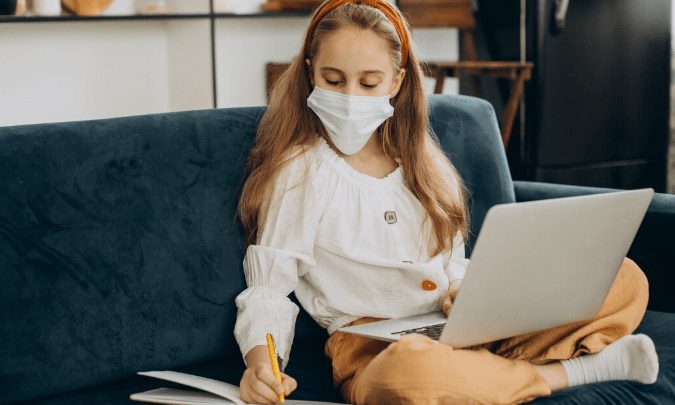
That distinction is important. Flexibility, family time, and a closer look at what their children were truly learning were cited by 43% of parents who said they ultimately saw more benefits from homeschooling than from their previous public school system. According to a former teacher, her kids flourished in those early months at home. The experience, which allows a family to slow down and breathe, was referred to by another as a gift. These are not stories of dramatic conversion. These are little insights that are quietly building up.
The story that the numbers convey isn’t even. Homeschool enrollment increased by 51% over a six-year period in states with comparable data, far outpacing the 7% increase in private school attendance. South Dakota experienced a 94% increase. A remarkable 108 percent was recorded by Washington, D.C. In those same states, enrollment in public schools decreased by about 4%. Yes, demographics play a part in that. Families voting with their feet, however, makes up a significant portion.
The demographics at any Tuesday morning homeschool co-op gathering will likely surprise you. During the first year of the pandemic, homeschooling among Black families increased fivefold, according to the U.S. Census Bureau, and this trend has continued. The stereotype of homeschoolers as a small, ideologically homogeneous group is no longer very accurate. Concerns about bullying, annoyance with strict schedules, a child with a learning disability who got lost in a classroom of thirty, and mistrust of culture-war arguments taking place in school board meetings are just a few of the many, sometimes contradictory, reasons parents bring to the discussion these days. The causes don’t neatly fall into one political category.
Additionally, there’s a feeling that homeschooling is gaining from more significant developments that no one is really discussing. The idea that life could be customized and that the nine to five wasn’t sacred was normalized by remote work. Why can’t children learn algebra using a laptop if parents can work from one while still in their pajamas? HSLDA’s Joel Grewe To put it simply, homeschooling is the natural progression of a culture that now demands customization for everything. The question of whether that’s a good development for civic life is another, and no one seems eager to address it just yet.
Public schools have not failed and never will. However, something is taking place on the periphery. A few district administrators are starting to experiment with part-time enrollment, virtual options, and hybrid models. It’s still unclear if those initiatives succeed in winning back families or just make it harder to distinguish between homeschooling and traditional education. The pre-2020 state of affairs is not likely to return. Once a curiosity, the kitchen table classroom has become a permanent fixture.
