Close Menu
RadiowavesRadiowaves
  • Homepage
  • Privacy Policy
  • Terms of Service
  • About Us
  • Disclaimer
  • News
  • Schools
  • Trending

The Fractured District: Why Segregation is Making a Quiet, Technical Comeback

May 22, 2026

What Would It Take to Double Teacher Pay in America — and Who Would Actually Pay For It?

May 22, 2026

The Hantavirus Scare at a New York High School — and What It Exposed About School Safety Protocols

May 22, 2026

The Turf Wars: The Multi-Million Dollar Battle for High School Stadium Rights

May 22, 2026
RadiowavesRadiowaves
Subscribe Login
  • Homepage
  • Privacy Policy
  • Terms of Service
  • About Us
  • Disclaimer
  • News
  • Schools
  • Trending
RadiowavesRadiowaves
Home » What Would It Take to Double Teacher Pay in America — and Who Would Actually Pay For It?
Schools

What Would It Take to Double Teacher Pay in America — and Who Would Actually Pay For It?

Jerry LegerBy Jerry LegerMay 22, 2026No Comments4 Mins Read
Facebook Twitter Pinterest LinkedIn Tumblr WhatsApp VKontakte Email
Double Teacher Pay in America
Share
Facebook Twitter LinkedIn Pinterest Email

The idea sounds simple enough until you start running the numbers. Double what America pays its teachers. Lift the floor, narrow the gap, end the slow bleed of talent out of the classroom. On a bumper sticker, it’s almost poetic. In a state budget meeting, it’s something else entirely — closer to a migraine.

Walk into almost any public school in the country on a Tuesday morning and you notice the same things. A first-year teacher hauling a plastic crate of books down a hallway that smells faintly of floor wax. A veteran in her fifties grading papers during what’s supposed to be her lunch. Somewhere, a long-term substitute is covering a chemistry class she hasn’t been trained to teach. These small scenes have become the texture of American public education, and they’re the quiet engine behind a debate that has, rather suddenly, lurched back into Washington.

Bills introduced in both chambers of Congress would push states toward a $60,000 minimum annual teacher salary. Nearly a dozen governors have hammered the same theme in recent state of the state addresses. It’s the loudest moment for teacher pay since the strike wave of 2018, and there’s a sense, fair or not, that something has to give. Teachers, by recent estimates, earn roughly 24 percent less than comparably educated professionals. That gap is not shrinking on its own.

It is quite another matter entirely to double teacher compensation. Approximately three million public school teachers work in the nation. Depending on whose information you believe, the average salary is close to $69,000. If you do even a rough calculation, the additional yearly expenditure comes to well over $200 billion, and that’s not even accounting for benefits, pensions, payroll taxes, and the inevitable ripple through principal and support staff salaries. In contrast, the federal Department of Education’s entire budget is a small portion of that. If the money is coming, it is not coming from that source.
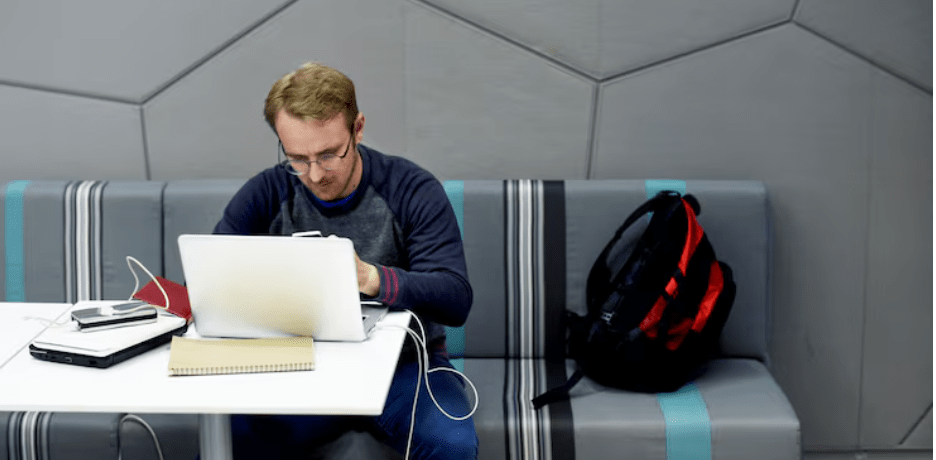
Double Teacher Pay in America

which consistently leaves the same two pockets. The majority of K–12 education is funded by state income and sales taxes and local property taxes, making school funding one of the most uneven systems in American public life. By passing a bond measure on a rainy Tuesday, a wealthy New Jersey suburb can increase teacher salaries. A Mississippi rural district is unable to. That disparity must be addressed in any sincere plan to double teacher pay nationwide, and the majority of the current proposals subtly fail to do so.

One veteran of the school board told me quite bluntly that there is also the Adam Smith problem. If you don’t pay enough, the classrooms will empty. If you pay too much, you won’t be able to hire new employees; applications will accumulate, positions will become scarce, and taxpayers will begin to ask pointed questions at town halls. After obtaining her certification, a neighbor of mine spent eighteen months looking for a teaching position—not because she wasn’t qualified, but rather because no one was leaving her district. The national debate doesn’t tell that story, and it adds to the complexity of the situation.

Then there’s the part that no one really wants to say aloud. Money is helpful, but it hasn’t been shown to be the only factor that keeps teachers in the classroom. Teachers frequently take pay reductions to leave public schools, according to recent analyses from two states. They depart due to unfavorable working conditions, ineffective leadership, disorderly classrooms, and a feeling of being controlled rather than trusted. None of that is resolved by a $60,000 floor.

What would it really require, then? Probably a hybrid — federal incentives layered over state action, targeted bonuses for hard-to-staff subjects and high-poverty schools, and the unglamorous work of fixing the buildings themselves. It’s difficult to avoid the impression that the nation is grabbing for the easy lever as the current proposals pass through Congress. It’s still very much up for debate whether it pulls hard enough and whether everyone can agree on who should pay.

America Teacher
Share. Facebook Twitter Pinterest LinkedIn Tumblr WhatsApp Email
Previous ArticleThe Hantavirus Scare at a New York High School — and What It Exposed About School Safety Protocols
Next Article The Fractured District: Why Segregation is Making a Quiet, Technical Comeback
Jerry Leger

    Jerry Leger is a full-time online writer and Senior Editor at radiowaves.co.uk, where he covers the latest research and developments across education, schools, colleges, and the world of sports. With a sharp eye for innovation and a genuine curiosity about how learning evolves, Jerry brings depth and clarity to topics that matter most to students, educators, and parents alike. Jerry writes with the kind of passion that only comes from genuinely caring about the subject, covering everything from curriculum changes and classroom policies to innovative school initiatives and the tales of athletic success. His work is easily readable and well-researched, whether he is dissecting the most recent findings in education or examining how innovation is changing the way we teach and learn.

    Related Posts

    The Hantavirus Scare at a New York High School — and What It Exposed About School Safety Protocols

    May 22, 2026

    The Turf Wars: The Multi-Million Dollar Battle for High School Stadium Rights

    May 22, 2026

    Inside Arnold High School: Soccer Champions, Jazz Bands, and a Student Theater No One Talks About

    May 22, 2026

    Donovan Mitchell High School Days: The Quiet Transfer That Built an NBA Star

    May 22, 2026
    Leave A Reply Cancel Reply

    You must be logged in to post a comment.

    Don't Miss
    News

    The Fractured District: Why Segregation is Making a Quiet, Technical Comeback

    By Jerry LegerMay 22, 20260

    Like most underfunded American schools, Walter H. Dyett High School on Chicago’s South Side has…

    What Would It Take to Double Teacher Pay in America — and Who Would Actually Pay For It?

    May 22, 2026

    The Hantavirus Scare at a New York High School — and What It Exposed About School Safety Protocols

    May 22, 2026

    The Turf Wars: The Multi-Million Dollar Battle for High School Stadium Rights

    May 22, 2026

    The ChatGPT Cheating Epidemic Is Worse Than Anyone Admits. Here’s the Proof.

    May 22, 2026

    Inside Arnold High School: Soccer Champions, Jazz Bands, and a Student Theater No One Talks About

    May 22, 2026

    Donovan Mitchell High School Days: The Quiet Transfer That Built an NBA Star

    May 22, 2026
    About Us
    About Us

    Radiowaves is the UK's trusted safe digital publishing platform for schools, built specifically to help children and young people report on their world through podcasts, video, and blogs. We believe every young person has a story worth telling — and we exist to make sure they can tell it safely.
    Whether it's covering a local sports day, exploring science at school, reporting on wildlife and the environment, or sharing creative work with the world, Radiowaves gives students the tools, the platform, and the confidence to become real reporters.

    Safe student publishing — podcasts, videos, blogs, and news stories, all moderated before going live
    A global network of young reporters — students connect with peers across the UK and around the world
    Curriculum-linked projects and competitions — exclusive opportunities that bring learning to life
    Teacher and parent confidence — every piece of content passes through safeguarding protocols before it is published

    Our platform is used by primary and secondary schools, and our content spans news, education, science, sport, the environment, music, and local community stories.

    Our Picks

    The Fractured District: Why Segregation is Making a Quiet, Technical Comeback

    May 22, 2026

    What Would It Take to Double Teacher Pay in America — and Who Would Actually Pay For It?

    May 22, 2026

    The Hantavirus Scare at a New York High School — and What It Exposed About School Safety Protocols

    May 22, 2026
    Disclaimer

    Radiowaves is a publishing platform for education. Nothing on this website should be interpreted as professional advice of any kind, including information about science, health, finance, economics, current affairs, or local news. Specifically, nothing on radiowaves.co.uk qualifies as tax advice, investment advice, financial advice, or any other type of regulated financial service. The Financial Conduct Authority (FCA) has neither authorized nor regulated Radiowaves Schools Ltd. Student reporters’ coverage of financial issues is solely intended for informational and educational purposes. Before making any financial decisions, readers should always speak with a qualified financial expert.
    The content of any external websites that are linked from this platform is not the responsibility of Radiowaves. An external link does not imply support for that website, its content, or its proprietors.
    Parents and guardians are encouraged to monitor their children’s online activity and report any concerns to their school or directly to Radiowaves via our Contact page, even though every effort is made to ensure the platform is safe for young users.

    The Financial Conduct Authority (FCA) or any other financial regulatory body in the UK or abroad has neither authorized nor regulated Radiowaves Schools Ltd. as a financial institution. When making financial decisions for oneself, a business, or an investment, nothing on this website should be trusted.
    Please speak with an independent financial advisor who is fully authorized and subject to FCA regulation if you need financial advice.

    • Homepage
    • Privacy Policy
    • Terms of Service
    • About Us
    • Disclaimer
    • News
    • Schools
    • Trending
    © 2026 ThemeSphere. Designed by ThemeSphere.

    Type above and press Enter to search. Press Esc to cancel.

    Sign In or Register

    Welcome Back!

    Login to your account below.

    Lost password?