

A certain type of institution never quite makes it into the national discourse, not because it’s failing but rather because it’s too preoccupied with its actual operations. That’s how Lamar University in Beaumont, Texas, feels. Sitting on a 299-acre urban campus that most people outside Southeast Texas couldn’t locate on a map, Lamar has spent the last decade growing in ways that are genuinely difficult to ignore, enrolling over 18,000 students as of fall 2025 and earning recognition as one of the fastest-growing universities in the state.
It had no lofty goals at first. In September 1923, South Park Junior College opened on the vacant third floor of a high school. Looking back, this detail seems incredibly modest. From there, Louis Pietzsch oversaw operations, and the college managed to obtain full accreditation in just two years. That early scrappiness is telling in some way. It alludes to a university that figured out how to accomplish more in less time before discussing efficiency in higher education became popular.
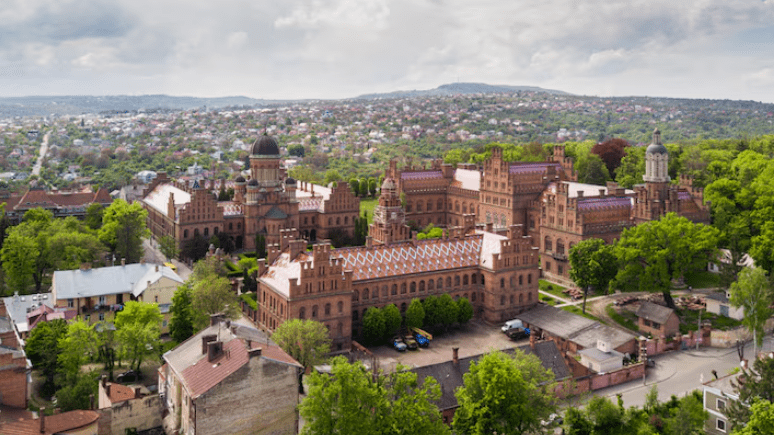
Lamar became a four-year state college by 1949 as a result of the influx of World War II veterans and a sharp increase in enrollment. It had university status by 1971. By 2024, it had received Carnegie classification as both an Opportunity and R2 Research University — placing it among a relatively small group of institutions nationwide recognized simultaneously for research output and serving economically diverse student populations. It’s not an accident, and maintaining that combination is challenging.
When looking at Lamar’s numbers, the financial reality it provides for students is what really sticks out. The Texas Higher Education Coordinating Board ranked it first in the state for lowest student debt. The cost of in-state tuition is slightly less than $11,000. For those who receive federal loans, the average net price is approximately $12,000. These are not abstract statistics — they represent the actual financial breathing room that graduates carry into their post-college lives. At a moment when national student debt has become a political flashpoint and a genuine economic crisis for millions of families, Lamar’s position here feels meaningful in ways that a simple ranking can’t capture.
It’s worth noting that Lamar’s four-year graduation rate, at 18%, remains low — a number that would raise eyebrows at institutions with more selective admissions. But Lamar accepts around 86% of applicants, meaning it is actively choosing to serve students who might not find a place elsewhere. That decision carries real consequences for graduation statistics, and it’s possible that critics who cite those numbers are measuring the wrong thing entirely. Graduation rates look different when your mission is access rather than exclusivity.
The university’s athletics program has recently added its own kind of momentum. The cheer team claimed second place at NCA College Nationals. The dance team took first place at The College Classic in Orlando. These are small victories in the broad landscape of college sports, but on a campus of this size, they register differently — they build identity and give students something to rally around in a city that doesn’t always get its fair share of attention.
There’s a feeling, watching Lamar’s trajectory, that the institution is operating somewhere between two versions of itself — still defined by its open-access roots, but quietly accumulating the credentials and research activity of something more ambitious. Whether it can sustain both identities simultaneously is still genuinely unclear. But it’s hard not to notice that, year after year, Beaumont’s flagship university keeps getting harder to overlook.
