

On a Saturday in early May, something truly overdue occurred on the north shore of Maui, where the trade winds press flat against the water and the waves at Hoʻokipa Beach Park have a way of arriving in sets that look almost too perfect to be real. In Hawaii‘s first-ever state surfing championship, nearly 180 high school students competed on longboards, shortboards, and bodyboards over the course of two full days of competition that the majority of the mainland most likely missed completely. However, it had significance in Hawaii.
It’s difficult to ignore how long this really took. In 2004, the state board of education authorized surfing as a school sport. Twenty years went by. Funding gaps, liability concerns, and safety concerns are just a few examples of the typical institutional friction that undermines concepts that appear to be entirely clear on the surface. Hawaii, the birthplace of surfing, home to world champions, and a place where the ocean is more of a way of life than a backdrop, debated for twenty years whether its own children should be permitted to compete for a state championship in a sport that the islands essentially invented. That type of institutional blindness is peculiar.
After three years of unsuccessful proposals, lawmakers finally moved things along with the nearly $1.4 million they set aside last session. Prior to that, surfing was practiced on the periphery of school sports, with clubs, regional contests, and students raising thousands of dollars just to pay for admission. It was only officially recognized by the Maui Interscholastic League. Children who surfed before school, after school, during the summers, and into adulthood were doing so completely outside the boundaries of the educational system everywhere else.
On the day of the competition, the atmosphere at Hoʻokipa exuded a sense of genuine novelty. Along the park, teams erect tents. During the girls’ shortboard semifinals, competitors were seen paddling hard toward incoming sets as a drone flew overhead. Moments like this seem different when you consider what came before them: years of coaches insisting that their training was demanding, parents witnessing their children pay for their own equipment, and administrators cautiously pushing back in the background.
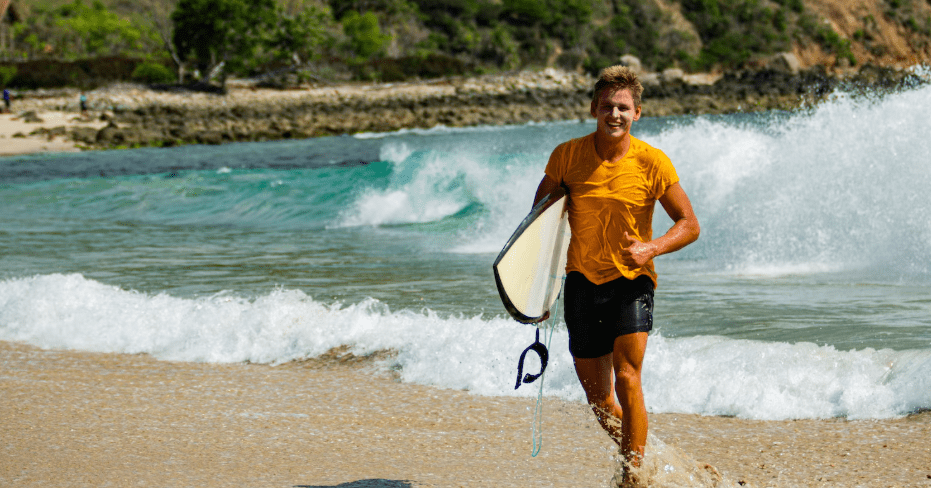
The girls’ team won the championship at Waialua High and Intermediate School. The picture of her teammates Nina Guzman and Aika Vieira rushing over after Skai Suitt won the girls’ shortboard—the kind of spontaneous celebration that doesn’t need context to land—said most of what needed to be said. Micah Ah You, 18, finished second in longboard, and Kahuku High and Intermediate won the team title for the boys. Before that Saturday, Ah You had never competed on Maui, had been surfing since he was twelve, and had surfed five times a week in the run-up to the championship. That particular detail sticks.
The boys’ shortboard division was won by Seabury Hall’s Kahlil Pineres-Schooley. Felix Barton took the boys’ bodyboard from the Big Island’s Hawai’i Academy of Arts and Science. These are the first state champions in a sport that has genuine cultural significance here, not fake school spirit, and their names should be in a record book somewhere.
Growing up in these same waters, Carissa Moore went on to become the youngest world champion at the age of 18. She once claimed that surfing taught her time management skills, perseverance, and how to fall and get back up. That may be precisely what Hawaii’s public schools have been lacking a formal framework for teaching. It’s still unclear whether funding will continue, whether the program will grow, and whether other states will eventually follow. However, the ocean at Hoʻokipa did what it always does in Hawaii for two days. It appeared.
