

More and more small towns and suburbs around the nation are witnessing this Friday-afternoon scene: a line of girls wearing mouthguards and pulled-back hair stretching their hamstrings before practice, a strip of artificial turf behind a high school, and the late sun slanting low. Not a single helmet. Do not wear shoulder pads. Only cleats, hip-clipped flags, and a coach somewhere yelling about route trees. It’s a subtle revolution that’s easy to overlook if you’re not looking for it.
It’s obvious that the NFL is searching. In order to expand the flag version of the sport, the league committed $32 million through its 32 Equity arm in December. This is a neat, almost poetic amount of $1 million per team. Then, on March 30, it revealed plans for a professional flag league that would include current players, retired stars, and Hall of Famers. The football operations chief for the league, Troy Vincent Sr., described it as finishing “the pathway.” Although that is corporate language, the underlying idea is genuine. Theoretically, a girl who picks up a flag in third grade can now see a line from her local field to the Olympic stage in Los Angeles in 2028. After that, she might even get paid.
The NFL may be acting purely out of kindness. The league might have read the numbers. In the United States, 4.1 million children play flag football, an increase of more than 50% since 2020. Women’s flag programs are currently offered by over 100 colleges. To be honest, it’s difficult to dispute the math.
The way the sport is actually played is fascinating. The first thing you notice when you watch it is how little brute force actually matters. If she runs her routes cleanly, a smaller, faster girl can shred a defense, and the cuts are sharper than you might think. As you watch, you get the impression that this game rewards a different kind of intelligence—spatial, anticipatory, almost chess-like. In a recent NPR interview, NYU professor and women’s sports writer Jane McManus put it simply: it’s skills-based, less violent, and much more approachable. If you don’t have a helmet, you can’t afford shoulder pads. A public school in rural Georgia can field a team without hosting a bake sale if there is no shoulder-pad budget.
A lot of the work here is being done by accessibility. Years ago, the sport was sanctioned by Florida and California, which now hold full state championships. New York came next. More than forty states have programs of some sort, and twenty-three states have official titles. Every state athletic association has its own politics and pace, so the patchwork is uneven, and there’s no assurance that the Super Bowl advertisement’s audacious “fifty states” tagline will appear anytime soon. Mom by mom, coach by coach, school district by school district—the movement has been grassroots. It appears less like a marketing campaign and more like community organizing.
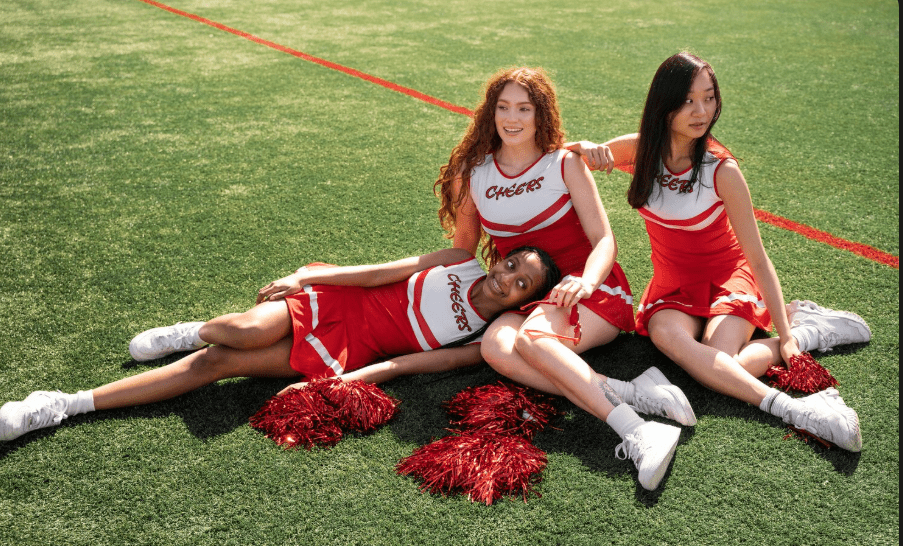
Beneath all of this is a more delicate tale. There is now a version of the sport that parents who are concerned about concussions and would never enroll their son or daughter in a tackle league can accept. Former soccer coaches now find themselves sketching flag plays on a clipboard. Additionally, the girls themselves appear to bring a certain level of self-assurance to the field—the kind that comes from starting something early.
It’s still unclear if the NFL’s professional league will survive. Money alone does not create a sport; women’s leagues have started and failed in the past. However, a ninth grader is currently running a slant route under a stadium light somewhere, and she isn’t asking permission to be there. That might be worth watching more than the $32 million.
