

The recent events in Miami have a subtle historic quality. The Formula 1 Crypto.com Miami Grand Prix attracted 2.6 million viewers on Apple TV on Sunday, more than any other live F1 broadcast in American history. The moment feels more significant than a ratings line because of the surrounding context, even though the number itself is astounding.
For a five-year exclusive agreement, Apple paid about $750 million, almost three times what ESPN was paying when it left. If you’re hedging, you don’t spend that amount. Apple’s senior vice president of services, Eddy Cue, referred to this weekend as a “relaunch,” and you can hear the cautious confidence in that term. Miami became more than just another stop on the schedule after Formula One lost two races in April, Bahrain and Saudi Arabia, both of which were canceled due to the conflict with Iran. It turned into the crucial moment for Apple.
| Detail | Information |
|---|---|
| Event | Formula 1 Crypto.com Miami Grand Prix 2026 |
| U.S. Broadcast Partner | Apple TV (exclusive, 5-year deal) |
| Deal Value | Approximately $750 million total / $150 million per year |
| Previous Broadcaster | ESPN (2018–2025, final extension worth nearly $90M) |
| Sunday Viewership | 2.6 million U.S. viewers — largest live audience in American F1 history |
| Broadcast Quality | 4K Dolby Vision with 5.1 surround sound |
| Multiview Feeds | Up to four simultaneous live feeds |
| Additional Live Feeds | Up to 30 across all sessions |
| Apple Executive Lead | Eddy Cue, SVP of Services |
| F1 President & CEO | Stefano Domenicali |
| New Programming | “Circuits in Focus” (Nico Rosberg, Emelia Hartford) and “POV” (Calum Nicholas, Christina Roki) |
| Theatrical Distribution | 50 IMAX locations nationwide; live broadcast in Times Square, New York |
| Alternate Stream | Tubi’s “The Fast Lane: Miami” with Michelle Khare, Jeremiah Burton, Scott Mansell |
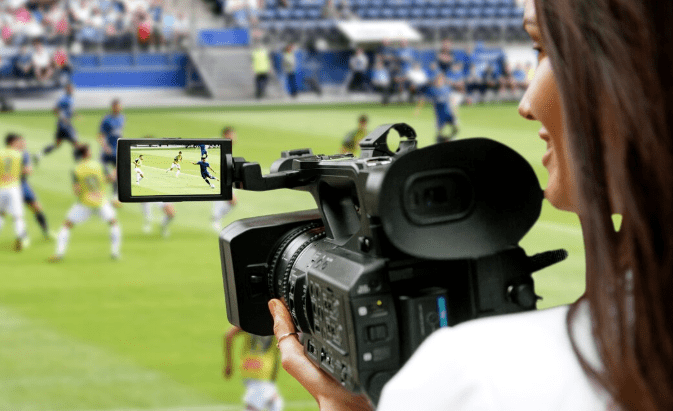
You can begin to comprehend why the audience attended by going through the production decisions. Cue likes to point out that Apple isn’t compressing the feed like other broadcasters do, and the race was broadcast in 4K Dolby Vision with 5.1 surround sound. Nearly one-third of viewers made use of the multiview feature, which allowed them to watch up to four feeds simultaneously, including real-time telemetry, podium trackers, and onboard cameras. For ardent F1 TV viewers, this kind of setup used to seem like a luxury. It is now simply present on the same app that people use to watch Ted Lasso.
As this develops, there’s a feeling that Apple is approaching Formula One more like a piece of software than a sporting event, something ESPN never quite grasped. Apple Maps provides comprehensive circuit layouts. Apple Music playlists selected by drivers. “Circuits in Focus” with Nico Rosberg and “POV,” a post-race analysis presented by former Red Bull technician Calum Nicholas and engineer Christina Roki, are two new programs. By itself, none of that is revolutionary. When combined, it begins to resemble an ecosystem play, something that Apple has successfully executed for the past 20 years while sports leagues have largely failed.
Another question is whether the numbers hold. The layoff likely caused pent-up demand because Miami is typically one of the most watched races of the year. The true test occurs in the middle of the season, when a routine Tuscan circuit must prove itself on a steamy Sunday afternoon. Apple is placing a wager that the integrations and production quality will be compelling enough to prevent casual viewers from returning to their phones.
It’s difficult to ignore how very American the entire experience felt. Fifty IMAX theaters showed the race. A broadcast was made in Times Square. Tubi collaborated with YouTube influencers to run a parallel altcast. For ten years, F1 has been chasing the American market, relying on Drive to Survive, night races in Las Vegas, and the Miami circus. With Apple’s arrival, the chase may finally pay off in a way that is independent of Netflix’s ability to sell drama.
The CEO of Formula One, Stefano Domenicali, referred to it as a new chapter. He has previously uttered variations of that statement. The numbers are beginning to support him this time.
