

Most people in Worcester, Massachusetts, drive by a hill without giving it much thought. The outline of stone structures perched above the city, partially obscured by ancient trees, can be seen from the road. It doesn’t make an announcement. It is not required to. For almost 200 years, the College of the Holy Cross has been working quietly, and its accomplishments speak louder than most brochures.
Holy Cross was established in 1843 by Bishop Benedict Joseph Fenwick, but it was the result of obstinacy and a small amount of resentment rather than careful planning. Fenwick had attempted to open a Catholic college in Boston, but the Protestant leadership of the city made it plain that this would not be possible. In spite of this, he traveled 45 miles west, located a hill with a view of the Blackstone River, and constructed something. He was so excited at the time that he wrote a letter in which he described a “splendid College” that would “command the view of the whole town of Worcester.” You can practically feel the satisfaction of a man proving his detractors wrong as you read it now.
It may not seem like much, but that origin story is important. The institution’s character—defiant, devoted, and somewhat at odds with the mainstream—was shaped by it. As the first Catholic college in New England, Holy Cross has never completely lost its identity as a place that had to struggle to survive. This is likely the reason it continues to produce a disproportionate number of serious individuals by most standards. The list of notable alumni, which includes Anthony Fauci, Clarence Thomas, Pulitzer Prize winners, five Rhodes Scholars, and a Nobel laureate, reads like an odd and amazing coincidence. That’s not only remarkable for a school with about 3,000 students, but it’s also worth looking into.
It’s difficult to ignore the meticulous attention to detail when strolling around the 174-acre campus today, which is a registered arboretum and feels more like a tiny, verdant estate than a traditional college. The National Register of Historic Places lists the older structures close to Fenwick Hall and O’Kane Hall.
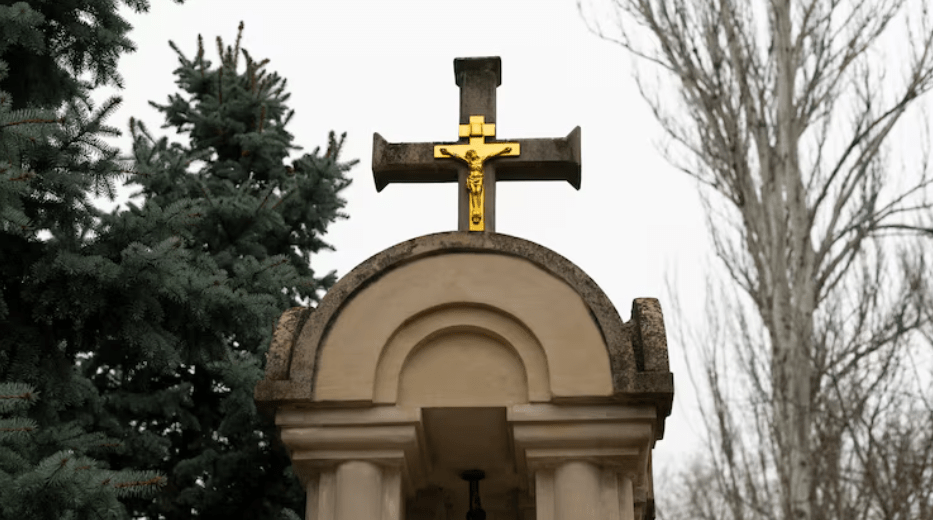
The Dinand Library, which opened in 1927, continues to host reading room events beneath a ceiling with carved details and gold trim, with a large wooden candelabra hanging overhead like something from a bygone era. It’s possible that these kinds of settings have an impact on the students who study there, or perhaps that’s just sentimental nonsense. On the hill, however, there’s a sense that time passes somewhat differently.
Holy Cross follows a strict liberal arts curriculum. Before they can call themselves graduates, students must complete coursework in the arts, language, history, religion, philosophy, and science rather than being given specific career paths. It sounds archaic, and perhaps it is. However, the endowment, which is among the highest per capita among liberal arts colleges in the United States, indicates that graduates have such positive memories of their education that they have generously contributed to it. The 2006 capital campaign surpassed its initial $175 million target by raising $216 million.
However, tension has always existed at the college. Time magazine once referred to it as the “cradle of the Catholic Left,” which, depending on who you ask, could be interpreted as a warning or a compliment. It has discussed its own mascot, held conferences on reproductive rights, and named Vincent Rougeau as its first Black and first lay president in its history in 2021. For a Jesuit organization established in the 1840s, these are significant changes.
It’s still unclear if Holy Cross will ever completely avoid being referred to as a “hidden gem“—a term that has good intentions but subtly disparages the object it describes. From the outside, it appears more accurate that the Worcester college on the hill was constructed precisely as its rebellious founder had envisioned. Something enduring. Something that commands attention.
