Close Menu
RadiowavesRadiowaves
  • Homepage
  • Contact
  • Privacy Policy
  • Terms of Service
  • About Us
  • Disclaimer
  • News
  • Schools
  • Trending

The Economic Boom of High School State Tournaments – Why Cities Fight to Host the Finals

June 8, 2026

The Veteran Teacher Who Walked Out After 20 Years – Her Resignation Letter Went Viral.

June 8, 2026

The Black Homeschool Movement That’s Growing Faster Than Anyone Expected

June 8, 2026

Girls Flag Football Is Now an Official High School Sport in Kansas – Title IX Will Never Look the Same.

June 8, 2026
RadiowavesRadiowaves
Subscribe Login
  • Homepage
  • Contact
  • Privacy Policy
  • Terms of Service
  • About Us
  • Disclaimer
  • News
  • Schools
  • Trending
RadiowavesRadiowaves
Home » The New Age of Surveillance – Why Middle Schools Are Tracking Students’ Biometrics
Schools

The New Age of Surveillance – Why Middle Schools Are Tracking Students’ Biometrics

Jerry LegerBy Jerry LegerMay 31, 2026No Comments4 Mins Read
Facebook Twitter Pinterest LinkedIn Tumblr WhatsApp VKontakte Email
The New Age of Surveillance: Why Middle Schools Are Tracking Students' Biometrics
Share
Facebook Twitter LinkedIn Pinterest Email

A thirteen-year-old walks off with a tray of pizza after pressing her thumb against a tiny grey scanner somewhere between the morning bell and the lunch line. She doesn’t consider it. The child behind her and the one after her don’t either. The line continues to move, the machine blinks green, and the account is debited. This is the current state of cafeteria efficiency in an increasing number of middle schools, and it also subtly represents mass biometric enrollment.

On its face, the vendor’s pitch is difficult to refute. Lunch cards are lost. Children on free meal programs who wish to keep their status a secret. The awkward dance at the register when a PIN is forgotten. A typical secondary school can process over 400 replacement payment cards in a single year, according to Nigel Walker of the UK biometrics company BioStore. He maintained that fingerprints cannot be misplaced or stolen. It’s a neat line. Additionally, administrators who are faced with tight budgets and longer cafeteria lines tend to find this line appealing.
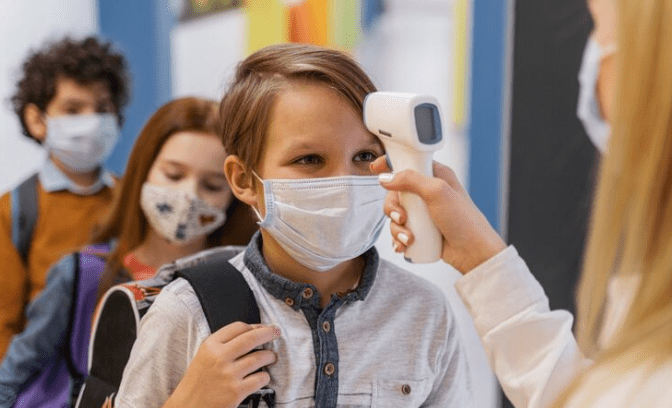
The New Age of Surveillance: Why Middle Schools Are Tracking Students' Biometrics
The New Age of Surveillance: Why Middle Schools Are Tracking Students’ Biometrics

However, as this develops year after year, it seems like the cafeteria was only the starting point. After the scanners are installed, the same technology begins to permeate computer logins, locker access, library checkouts, attendance, and even the buses leaving the lot. In 2014, Big Brother Watch estimated that over a million secondary school students in Britain had already turned in their prints. The trend lines don’t indicate moderation, but no one in the US is keeping a clean tally.

Things have progressed even more quickly on the internet. Fourteen businesses were found to be offering online surveillance services to schools, including social media, email, document, and web browsing monitoring, according to a 2025 systematic analysis that was published in the Journal of Medical Internet Research. Of those fourteen, twelve continued to monitor students around-the-clock, well beyond school hours and off school property. Ten flagged suspicious activity using artificial intelligence (AI). Less than half of them had an algorithmic human review team. The researchers discovered that two of them would independently call the police.

The final detail is the one that sticks out. When to call the police on a child is determined by a piece of software that has been trained on patterns that no one outside the company fully understands. Another noteworthy finding by the researchers is that students who only have access to devices provided by the school are subjected to more surveillance than their peers who have laptops at home. In other words, children whose families are least able to resist are frequently the ones who are most likely to be observed.

Defenders cite school shootings, high rates of youth suicide, and cyberbullying that uses children’s phones to follow them home. These concerns are real. According to surveys, the majority of parents and educators are in favor of the monitoring tools, at least in theory. It feels about right that students themselves are more divided. They are the ones under observation.

The technology itself isn’t always what worries privacy researchers; rather, it’s how carelessly consent is handled. Before a school could fingerprint a child, the UK’s Protection of Freedoms Act of 2012 required written parental consent. However, many children enrolled prior to that law had their data quietly absorbed without ever seeking consent. For years, Emmeline Taylor, the author of the book Surveillance Schools, has maintained that children raised in such environments cease to perceive it as abnormal. The scanner at the door and the blackboard at the front of the room begin to resemble identical pieces of furniture.

It’s difficult to ignore the fact that we are conducting a generational experiment with little idea of the outcome. The buildings are safer, according to the schools. Perhaps they are. It will take some time to respond if the children within them are developing a significantly different attitude toward privacy, authority, and the notion that someone is constantly observing.

Biometrics Surveillance
Share. Facebook Twitter Pinterest LinkedIn Tumblr WhatsApp Email
Previous ArticleHow a 72-Year-Old Supreme Court Ruling Is Still Reshaping American Classrooms Today
Next Article The Coach’s Ultimatum – The Intense Pressure of High-Volume High School Recruiting
Jerry Leger

Jerry Leger is a full-time online writer and Senior Editor at radiowaves.co.uk, where he covers the latest research and developments across education, schools, colleges, and the world of sports. With a sharp eye for innovation and a genuine curiosity about how learning evolves, Jerry brings depth and clarity to topics that matter most to students, educators, and parents alike. Jerry writes with the kind of passion that only comes from genuinely caring about the subject, covering everything from curriculum changes and classroom policies to innovative school initiatives and the tales of athletic success. His work is easily readable and well-researched, whether he is dissecting the most recent findings in education or examining how innovation is changing the way we teach and learn.

Related Posts

The Black Homeschool Movement That’s Growing Faster Than Anyone Expected

June 8, 2026

Ratcliffe College – The Hidden Gem of English Education That Parents Are Quietly Obsessing Over

June 8, 2026

Lamar University Is Growing Faster Than Anyone Expected — Here’s Why That Matters

June 8, 2026

San Jose Unified School District Is Closing 5 Schools — And Parents Are Furious

June 8, 2026

Comments are closed.

Don't Miss
News

The Economic Boom of High School State Tournaments – Why Cities Fight to Host the Finals

By Jerry LegerJune 8, 20260

On the third weekend of February, there is a distinct difference when you stroll through…

The Veteran Teacher Who Walked Out After 20 Years – Her Resignation Letter Went Viral.

June 8, 2026

The Black Homeschool Movement That’s Growing Faster Than Anyone Expected

June 8, 2026

Girls Flag Football Is Now an Official High School Sport in Kansas – Title IX Will Never Look the Same.

June 8, 2026

The Parents Rights Law That Has Schools Terrified of Their Own Curricula

June 8, 2026

The Quiet Epidemic of Anxiety in American High Schools — and the Districts That Are Actually Doing Something About It

June 8, 2026

Ratcliffe College – The Hidden Gem of English Education That Parents Are Quietly Obsessing Over

June 8, 2026
About Us
About Us

Radiowaves is the UK's trusted safe digital publishing platform for schools, built specifically to help children and young people report on their world through podcasts, video, and blogs. We believe every young person has a story worth telling — and we exist to make sure they can tell it safely.
Whether it's covering a local sports day, exploring science at school, reporting on wildlife and the environment, or sharing creative work with the world, Radiowaves gives students the tools, the platform, and the confidence to become real reporters.

Safe student publishing — podcasts, videos, blogs, and news stories, all moderated before going live
A global network of young reporters — students connect with peers across the UK and around the world
Curriculum-linked projects and competitions — exclusive opportunities that bring learning to life
Teacher and parent confidence — every piece of content passes through safeguarding protocols before it is published

Our platform is used by primary and secondary schools, and our content spans news, education, science, sport, the environment, music, and local community stories.

Our Picks

The Economic Boom of High School State Tournaments – Why Cities Fight to Host the Finals

June 8, 2026

The Veteran Teacher Who Walked Out After 20 Years – Her Resignation Letter Went Viral.

June 8, 2026

The Black Homeschool Movement That’s Growing Faster Than Anyone Expected

June 8, 2026
Disclaimer

Radiowaves is a publishing platform for education. Nothing on this website should be interpreted as professional advice of any kind, including information about science, health, finance, economics, current affairs, or local news. Specifically, nothing on radiowaves.co.uk qualifies as tax advice, investment advice, financial advice, or any other type of regulated financial service. The Financial Conduct Authority (FCA) has neither authorized nor regulated Radiowaves Schools Ltd. Student reporters’ coverage of financial issues is solely intended for informational and educational purposes. Before making any financial decisions, readers should always speak with a qualified financial expert.
The content of any external websites that are linked from this platform is not the responsibility of Radiowaves. An external link does not imply support for that website, its content, or its proprietors.
Parents and guardians are encouraged to monitor their children’s online activity and report any concerns to their school or directly to Radiowaves via our Contact page, even though every effort is made to ensure the platform is safe for young users.

The Financial Conduct Authority (FCA) or any other financial regulatory body in the UK or abroad has neither authorized nor regulated Radiowaves Schools Ltd. as a financial institution. When making financial decisions for oneself, a business, or an investment, nothing on this website should be trusted.
Please speak with an independent financial advisor who is fully authorized and subject to FCA regulation if you need financial advice.

  • Homepage
  • Contact
  • Privacy Policy
  • Terms of Service
  • About Us
  • Disclaimer
  • News
  • Schools
  • Trending
© 2026 ThemeSphere. Designed by ThemeSphere.

Type above and press Enter to search. Press Esc to cancel.

Sign In or Register

Welcome Back!

Login to your account below.

Lost password?