Close Menu
RadiowavesRadiowaves
  • Homepage
  • Privacy Policy
  • Terms of Service
  • About Us
  • Disclaimer
  • News
  • Schools
  • Trending

How Long Is the AP CSA Exam? The Three-Hour Test That Decides College Credit

May 19, 2026

Inside the APES Exam Format – What Students Walking Into Bluebook Should Actually Expect

May 19, 2026

Inside the English Gardening School – Where London’s Most Famous Gardeners Were Quietly Made

May 19, 2026

AP Stats Exam Time – What Three Hours Really Feels Like in That Room

May 19, 2026
RadiowavesRadiowaves
Subscribe Login
  • Homepage
  • Privacy Policy
  • Terms of Service
  • About Us
  • Disclaimer
  • News
  • Schools
  • Trending
RadiowavesRadiowaves
Home » Inside the APES Exam Format – What Students Walking Into Bluebook Should Actually Expect
Schools

Inside the APES Exam Format – What Students Walking Into Bluebook Should Actually Expect

Jerry LegerBy Jerry LegerMay 19, 2026No Comments4 Mins Read
Facebook Twitter Pinterest LinkedIn Tumblr WhatsApp VKontakte Email
Apes Exam Format
Apes Exam Format
Share
Facebook Twitter LinkedIn Pinterest Email

In high school hallways, May 15 mornings always feel a little off. Half asleep, clutching water bottles and graphing calculators that have seen better days, students arrive earlier than usual. Some people don’t talk. Some make nervous jokes about nitrogen cycles and ecosystems. By eight in the morning, they are waiting for the start of the AP Environmental Science exam while sitting in front of laptops with the Bluebook app glowing back at them. Even though thousands of schools perform this little ritual, most students entering it are unaware of what they are about to encounter.

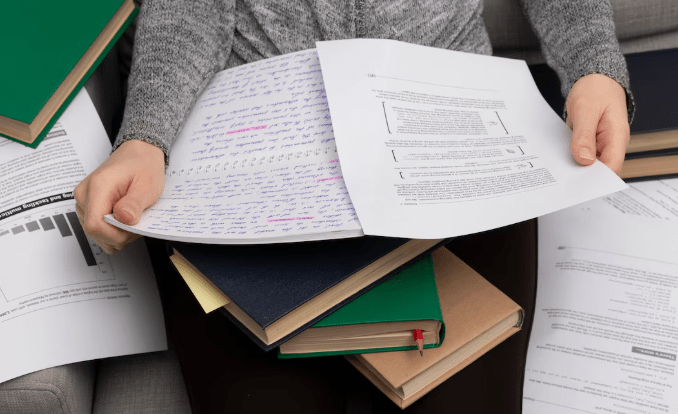
Two hours and forty minutes are allotted for the exam. Until you actually sit through it, that seems doable. You have ninety minutes to complete the eighty multiple-choice questions in Section I, or slightly more than a minute per question. You have seventy minutes to complete three free-response questions in Section II, and the math is harder than it seems. Now that everything is entirely digital and automatically submitted via Bluebook, one worry is eliminated while another is introduced. The margins are not scribbled. No more turning pages the old-fashioned way.
Apes Exam Format
Apes Exam Format

The structure of the multiple-choice portion is what makes it intriguing. Certain questions are self-contained; if you are familiar with the subject, you can respond to them in a matter of seconds. Others are composed of short text passages, charts, maps, or data tables. Of those sets, three or four heavily rely on quantitative data—graphs that require close examination. Three or four deal with qualitative content, such as representations or models. Two sets draw from sources that are text-based. This format is intended to assess students’ ability to think critically about the science rather than merely memorize it. A lot of preparation goes awry when it comes to that distinction.

Scores are secretly determined during the free-response portion. The first question asks students to design an investigation, which seems simple until you consider how simple it is to overlook a control or a variable. The second question challenges you to evaluate an environmental issue and suggest a fix. The Rule of 70, half-life, dimensional analysis, and other computations that penalize those who haven’t practiced under pressure are all included in question three. Careful writers typically outperform memorizers in this area, which accounts for 40% of the score.

Speaking with instructors who have taught this course for years, it seems that the digital format has altered the exam’s rhythm in ways that the College Board doesn’t fully promote. In the past, students would circle back after flagging questions. They now move through screens more quickly, but it’s also more confusing. Some students claim to have extra time after finishing. Some claim that before they even process the second FRQ prompt, the clock runs out. Depending on how well a person has internalized the seven science practices that the exam keeps returning to, both could be true.

When combined, the nine content units—ecosystems, biodiversity, populations, earth systems, land and water use, energy, atmospheric pollution, aquatic pollution, and global change—sound enormous. In actuality, not all trivia is tested on the test. It assesses students’ ability to make connections between ideas, read a graph truthfully, and compose a cohesive paragraph outlining the significance of a wetland or the potential operation of a carbon tax.

At 8 a.m. in May, that’s more difficult than it sounds. It’s difficult to ignore how much the test favors poise over intelligence. Pupils who struggle with math frequently have a deeper understanding of the subject than their test results indicate. As this happens year after year, there’s a sense that the APES exam isn’t really measuring environmental science alone, but rather how well a teen can think when the screen won’t wait, the timer is running, and the room is silent.

Apes Exam Format
Share. Facebook Twitter Pinterest LinkedIn Tumblr WhatsApp Email
Previous ArticleInside the English Gardening School – Where London’s Most Famous Gardeners Were Quietly Made
Next Article How Long Is the AP CSA Exam? The Three-Hour Test That Decides College Credit
Jerry Leger

    Jerry Leger is a full-time online writer and Senior Editor at radiowaves.co.uk, where he covers the latest research and developments across education, schools, colleges, and the world of sports. With a sharp eye for innovation and a genuine curiosity about how learning evolves, Jerry brings depth and clarity to topics that matter most to students, educators, and parents alike. Jerry writes with the kind of passion that only comes from genuinely caring about the subject, covering everything from curriculum changes and classroom policies to innovative school initiatives and the tales of athletic success. His work is easily readable and well-researched, whether he is dissecting the most recent findings in education or examining how innovation is changing the way we teach and learn.

    Related Posts

    Inside the English Gardening School – Where London’s Most Famous Gardeners Were Quietly Made

    May 19, 2026

    The Charter School Boom Promised to Fix America’s Worst Districts – Here’s the Report Card.

    May 18, 2026

    Inside New York City’s Most Controversial Public School Experiment

    May 18, 2026

    Brandon Clarke College Years – The Quiet Transformation Nobody Saw Coming

    May 18, 2026
    Leave A Reply Cancel Reply

    You must be logged in to post a comment.

    Don't Miss
    Education

    How Long Is the AP CSA Exam? The Three-Hour Test That Decides College Credit

    By Jerry LegerMay 19, 20260

    Every May, at noon, a certain silence descends upon high school computer labs nationwide. After…

    Inside the APES Exam Format – What Students Walking Into Bluebook Should Actually Expect

    May 19, 2026

    Inside the English Gardening School – Where London’s Most Famous Gardeners Were Quietly Made

    May 19, 2026

    AP Stats Exam Time – What Three Hours Really Feels Like in That Room

    May 19, 2026

    How Long Is The AP Stats Exam 2026 And Why That Number Feels Deceiving

    May 19, 2026

    The Charter School Boom Promised to Fix America’s Worst Districts – Here’s the Report Card.

    May 18, 2026

    Inside New York City’s Most Controversial Public School Experiment

    May 18, 2026
    About Us
    About Us

    Radiowaves is the UK's trusted safe digital publishing platform for schools, built specifically to help children and young people report on their world through podcasts, video, and blogs. We believe every young person has a story worth telling — and we exist to make sure they can tell it safely.
    Whether it's covering a local sports day, exploring science at school, reporting on wildlife and the environment, or sharing creative work with the world, Radiowaves gives students the tools, the platform, and the confidence to become real reporters.

    Safe student publishing — podcasts, videos, blogs, and news stories, all moderated before going live
    A global network of young reporters — students connect with peers across the UK and around the world
    Curriculum-linked projects and competitions — exclusive opportunities that bring learning to life
    Teacher and parent confidence — every piece of content passes through safeguarding protocols before it is published

    Our platform is used by primary and secondary schools, and our content spans news, education, science, sport, the environment, music, and local community stories.

    Our Picks

    How Long Is the AP CSA Exam? The Three-Hour Test That Decides College Credit

    May 19, 2026

    Inside the APES Exam Format – What Students Walking Into Bluebook Should Actually Expect

    May 19, 2026

    Inside the English Gardening School – Where London’s Most Famous Gardeners Were Quietly Made

    May 19, 2026
    Disclaimer

    Radiowaves is a publishing platform for education. Nothing on this website should be interpreted as professional advice of any kind, including information about science, health, finance, economics, current affairs, or local news. Specifically, nothing on radiowaves.co.uk qualifies as tax advice, investment advice, financial advice, or any other type of regulated financial service. The Financial Conduct Authority (FCA) has neither authorized nor regulated Radiowaves Schools Ltd. Student reporters’ coverage of financial issues is solely intended for informational and educational purposes. Before making any financial decisions, readers should always speak with a qualified financial expert.
    The content of any external websites that are linked from this platform is not the responsibility of Radiowaves. An external link does not imply support for that website, its content, or its proprietors.
    Parents and guardians are encouraged to monitor their children’s online activity and report any concerns to their school or directly to Radiowaves via our Contact page, even though every effort is made to ensure the platform is safe for young users.

    The Financial Conduct Authority (FCA) or any other financial regulatory body in the UK or abroad has neither authorized nor regulated Radiowaves Schools Ltd. as a financial institution. When making financial decisions for oneself, a business, or an investment, nothing on this website should be trusted.
    Please speak with an independent financial advisor who is fully authorized and subject to FCA regulation if you need financial advice.

    • Homepage
    • Privacy Policy
    • Terms of Service
    • About Us
    • Disclaimer
    • News
    • Schools
    • Trending
    © 2026 ThemeSphere. Designed by ThemeSphere.

    Type above and press Enter to search. Press Esc to cancel.

    Sign In or Register

    Welcome Back!

    Login to your account below.

    Lost password?