Close Menu
RadiowavesRadiowaves
  • Homepage
  • Contact
  • Privacy Policy
  • Terms of Service
  • About Us
  • Disclaimer
  • News
  • Schools
  • Trending

The State That Banned AP African American Studies. The College Board Just Responded.

June 3, 2026

How America’s School Lunch Debt Crisis Became a $262 Million Problem Nobody Wants to Fix

June 3, 2026

Dumfries and Galloway College Is Quietly Doing What Big Universities Can’t

June 3, 2026

Inside Piel Canela Dance School: Where Salsa Isn’t Just a Dance, It’s a Lifestyle

June 3, 2026
RadiowavesRadiowaves
Subscribe Login
  • Homepage
  • Contact
  • Privacy Policy
  • Terms of Service
  • About Us
  • Disclaimer
  • News
  • Schools
  • Trending
RadiowavesRadiowaves
Home » How America’s School Lunch Debt Crisis Became a $262 Million Problem Nobody Wants to Fix
Schools

How America’s School Lunch Debt Crisis Became a $262 Million Problem Nobody Wants to Fix

Jerry LegerBy Jerry LegerJune 3, 2026No Comments5 Mins Read
Facebook Twitter Pinterest LinkedIn Tumblr WhatsApp VKontakte Email
America's School Lunch Debt Crisis
Share
Facebook Twitter LinkedIn Pinterest Email

When Vincent Montoya-Armanios was younger, he was merely attempting to obtain lunch. However, he was pulled aside by a school staff member between the tray line and the table, who instructed him to “speak to the manager.” Before allowing him to eat, the manager, a school official, questioned him about why he lacked money. This took place in Pennsylvania. The 2010s. Not in the midst of the Great Depression. Not in some far-off historical period of deliberate brutality. the previous ten years.

Long after you’ve finished reading it, that story remains in your stomach. It’s also not an anomaly. Currently, over 1.5 million students in America have school lunch debt; this amounts to approximately $262 million in unpaid meal balances nationwide. Meal debts are recorded in the books of more than 75% of schools. Since 2017, the cost of a school lunch has almost doubled, with some districts charging as much as $5. Five dollars. That adds up quickly for a child whose family makes just above the federal poverty threshold.

The federal eligibility threshold for free lunches hardly keeps up with the state of the economy. For the 2022–2023 school year, a family of four had to make less than $36,075 per year to be eligible for free meals. When you consider how many working families fall just above that threshold and are still unable to make ends meet at the end of the month, that may seem like a safety net. Up to 25% of students who experience food insecurity reside in households that are not eligible for any kind of aid. They are completely absent from the program, which was created to assist.
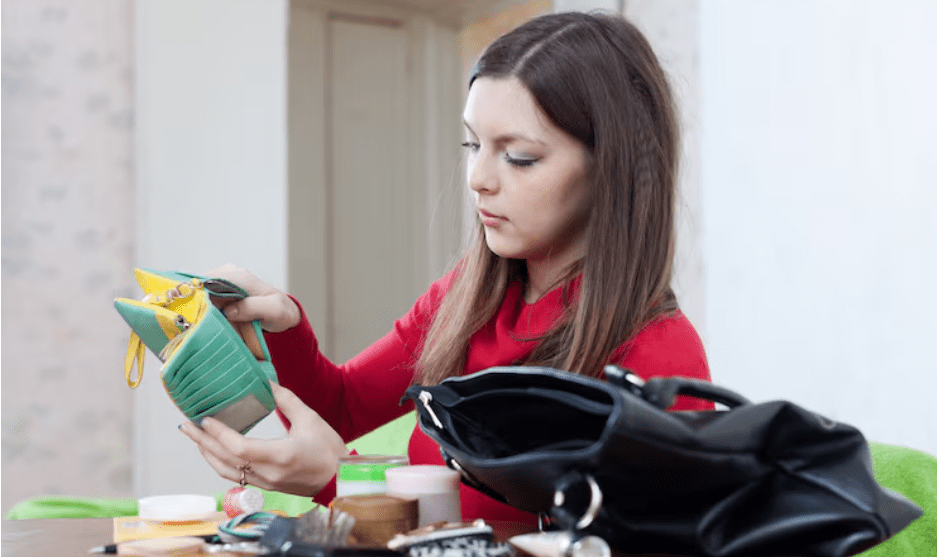
America's School Lunch Debt Crisis
America’s School Lunch Debt Crisis

This system functions with a subtle humiliation built in. Since schools are not allowed to write off meal debt using federal reimbursement funds, they rely on corporate donors, parent-teacher associations, and local charities to make up the difference. Sometimes grocery chains intervene. Businesses write checks. For a news cycle, people are happy about it. Then, since nothing structural has changed, the debt starts to build up once more. It’s the type of “fix” that doesn’t solve anything and necessitates endless repetition.

When Tolulope Olaniyan was in seventh grade in North Carolina, she was informed by school personnel that she was not allowed to eat the hot meal while standing in line with her peers. Instead, she would have to accept the cold sandwich. To avoid the embarrassment, she began skipping lunch. Even so, she was forced to observe from the cafeteria by the school administration. When she thought back on that year, she said she didn’t know how she managed to survive, frequently going hours without eating and holding on because she knew there might be food when she got home.

Taylor, a lead cook at an elementary school in Indianapolis who requested anonymity out of concern for her job, observes which children are removed from the hot meal line. She observes the sadness on their faces. She said that Black children from working-class families, whose parents work two or three jobs, make up the majority of the students she talks to about negative balances. Every shift, the data confirms what she observes. Debt from school lunches is not distributed equally. Students of color, working-class communities, and children who already have the least margin for error are all more affected.

It’s possible that some legislators sincerely think the current patchwork of means-testing and charity is sufficient. Another possibility is that they just don’t want to pay much attention to who is failing. Congress completely suspended the income requirements during the COVID-19 pandemic. Free meals were given to every student. Less than two-tenths of one percent of federal spending in 2022 was spent on the program, which cost roughly $11 billion annually. In June of that year, Republicans put an end to it. Some states took action to close the gap; since then, legislation funding universal free school meals has been passed in California, Colorado, Minnesota, and Maine. The majority of states have not.

Philando Castile was well-known in his school community as the cafeteria supervisor who surreptitiously used his own paycheck to settle students’ meal debts. He is best known nationally as the man who was killed during a traffic stop in Minnesota in 2016. His mother gave $8,000 to erase lunch balances at a nearby high school after his passing. It is worthwhile to accept that educators and cafeteria employees are using their personal income to support a dysfunctional public system. It’s difficult to ignore the fact that those closest to hunger in these schools frequently lack the resources necessary to address it, yet they persist in their efforts.

A group of activists in Bucks County, Pennsylvania, accomplished something that initially seemed improbable: they put pressure on a nearby school district to simply waive its outstanding lunch debt. The Bristol Borough School District completely erased $15,000 in student debt from its records after nine months of meetings, a public debt assembly, opinion pieces, and board meetings. The board president subsequently acknowledged that the matter had become “lost in the pile” until it was brought up directly. That the $262 million national debt may continue in large part because the appropriate people haven’t yet been sufficiently uncomfortable is both encouraging and somewhat concerning.

Publicly funded universal free school lunches are not a radical concept. It’s a decision about policy. Textbooks are not paid for by kids. To board the school bus, they do not swipe a card. For those aspects of public education, there is no income threshold. Right now, the only pertinent question is why lunch is different and who stands to gain from maintaining that distinction.

America Debt
Share. Facebook Twitter Pinterest LinkedIn Tumblr WhatsApp Email
Previous ArticleDumfries and Galloway College Is Quietly Doing What Big Universities Can’t
Next Article The State That Banned AP African American Studies. The College Board Just Responded.
Jerry Leger

    Jerry Leger is a full-time online writer and Senior Editor at radiowaves.co.uk, where he covers the latest research and developments across education, schools, colleges, and the world of sports. With a sharp eye for innovation and a genuine curiosity about how learning evolves, Jerry brings depth and clarity to topics that matter most to students, educators, and parents alike. Jerry writes with the kind of passion that only comes from genuinely caring about the subject, covering everything from curriculum changes and classroom policies to innovative school initiatives and the tales of athletic success. His work is easily readable and well-researched, whether he is dissecting the most recent findings in education or examining how innovation is changing the way we teach and learn.

    Related Posts

    Inside Piel Canela Dance School: Where Salsa Isn’t Just a Dance, It’s a Lifestyle

    June 3, 2026

    A Chicago Businessman Spent His Fortune on Black Schools in the Jim Crow South, America Is Finally Paying Attention

    June 2, 2026

    The Small Town School District That Became a National Model — Against All Odds

    June 2, 2026

    The High School Concussion Crisis: Can Technology Save the Game of Football?

    June 2, 2026
    Leave A Reply Cancel Reply

    You must be logged in to post a comment.

    Don't Miss
    Education

    The State That Banned AP African American Studies. The College Board Just Responded.

    By Jerry LegerJune 3, 20260

    AP African American Studies was outlawed in Florida. The College Board then requested an explanation…

    How America’s School Lunch Debt Crisis Became a $262 Million Problem Nobody Wants to Fix

    June 3, 2026

    Dumfries and Galloway College Is Quietly Doing What Big Universities Can’t

    June 3, 2026

    Inside Piel Canela Dance School: Where Salsa Isn’t Just a Dance, It’s a Lifestyle

    June 3, 2026

    Robert Gordon University Is Cutting Jobs — but Is It Sacrificing Its Soul?

    June 3, 2026

    Holy Cross University: The Hidden Ivy That’s Been Quietly Outranking Everyone

    June 3, 2026

    Briar University Doesn’t Exist — But Here’s Where They Actually Filmed It

    June 3, 2026
    About Us
    About Us

    Radiowaves is the UK's trusted safe digital publishing platform for schools, built specifically to help children and young people report on their world through podcasts, video, and blogs. We believe every young person has a story worth telling — and we exist to make sure they can tell it safely.
    Whether it's covering a local sports day, exploring science at school, reporting on wildlife and the environment, or sharing creative work with the world, Radiowaves gives students the tools, the platform, and the confidence to become real reporters.

    Safe student publishing — podcasts, videos, blogs, and news stories, all moderated before going live
    A global network of young reporters — students connect with peers across the UK and around the world
    Curriculum-linked projects and competitions — exclusive opportunities that bring learning to life
    Teacher and parent confidence — every piece of content passes through safeguarding protocols before it is published

    Our platform is used by primary and secondary schools, and our content spans news, education, science, sport, the environment, music, and local community stories.

    Our Picks

    The State That Banned AP African American Studies. The College Board Just Responded.

    June 3, 2026

    How America’s School Lunch Debt Crisis Became a $262 Million Problem Nobody Wants to Fix

    June 3, 2026

    Dumfries and Galloway College Is Quietly Doing What Big Universities Can’t

    June 3, 2026
    Disclaimer

    Radiowaves is a publishing platform for education. Nothing on this website should be interpreted as professional advice of any kind, including information about science, health, finance, economics, current affairs, or local news. Specifically, nothing on radiowaves.co.uk qualifies as tax advice, investment advice, financial advice, or any other type of regulated financial service. The Financial Conduct Authority (FCA) has neither authorized nor regulated Radiowaves Schools Ltd. Student reporters’ coverage of financial issues is solely intended for informational and educational purposes. Before making any financial decisions, readers should always speak with a qualified financial expert.
    The content of any external websites that are linked from this platform is not the responsibility of Radiowaves. An external link does not imply support for that website, its content, or its proprietors.
    Parents and guardians are encouraged to monitor their children’s online activity and report any concerns to their school or directly to Radiowaves via our Contact page, even though every effort is made to ensure the platform is safe for young users.

    The Financial Conduct Authority (FCA) or any other financial regulatory body in the UK or abroad has neither authorized nor regulated Radiowaves Schools Ltd. as a financial institution. When making financial decisions for oneself, a business, or an investment, nothing on this website should be trusted.
    Please speak with an independent financial advisor who is fully authorized and subject to FCA regulation if you need financial advice.

    • Homepage
    • Contact
    • Privacy Policy
    • Terms of Service
    • About Us
    • Disclaimer
    • News
    • Schools
    • Trending
    © 2026 ThemeSphere. Designed by ThemeSphere.

    Type above and press Enter to search. Press Esc to cancel.

    Sign In or Register

    Welcome Back!

    Login to your account below.

    Lost password?