

As soon as you exit the elevator and reach the fourth floor of 500 8th Avenue, you notice that the music isn’t waiting for you. Before you’ve even located the studio entrance, it’s already there, rolling down the corridor. Heels are striking a Marley floor somewhere inside in a rhythm that is both perfectly alive and disciplined. Since October 2000, Piel Canela Dance School has been producing that sound.
The school is tucked away in a structure that most Midtown commuters pass by without giving it a second look, two blocks north of Madison Square Garden. It’s interesting in part because of that. The address doesn’t seem all that dramatic from the outside. However, if you ascend those stairs, you will find fifteen studios, some large and some small, with mirrored walls, sprung wooden floors, acoustic curtains, and pianos that appear to have been played. switching rooms. Each floor has a bathroom. It’s the kind of infrastructure that implies someone gave careful consideration to what dancers truly require, rather than just what looks nice in a brochure.
The school was founded on Joe and Bianca, a couple whose on-stage chemistry has reportedly won over audiences in more than 20 countries. They have performed at almost all of the circuit’s major salsa congresses. The list of corporate clients is extensive. Their resume is impressive by any standard, so it’s important to note that affordability has always been their top priority. In a city that charges a premium for nearly everything, group classes, private lessons, social events, and online instruction are still affordable. That is most likely both a competitive strategy and a philosophical commitment.
It’s difficult to ignore how purposefully the school has organized itself around community. The events calendar is practically a second curriculum; it is not an afterthought. After learning the footwork in class, students use it at outdoor events and socials where there is less pressure and genuine dancing. It seems that the founders recognized early on that a technique becomes stale without context. Even after weeks of practicing a turn pattern, you will still freeze when someone asks you to dance. It appears that Piel Canela was designed to address that particular issue.
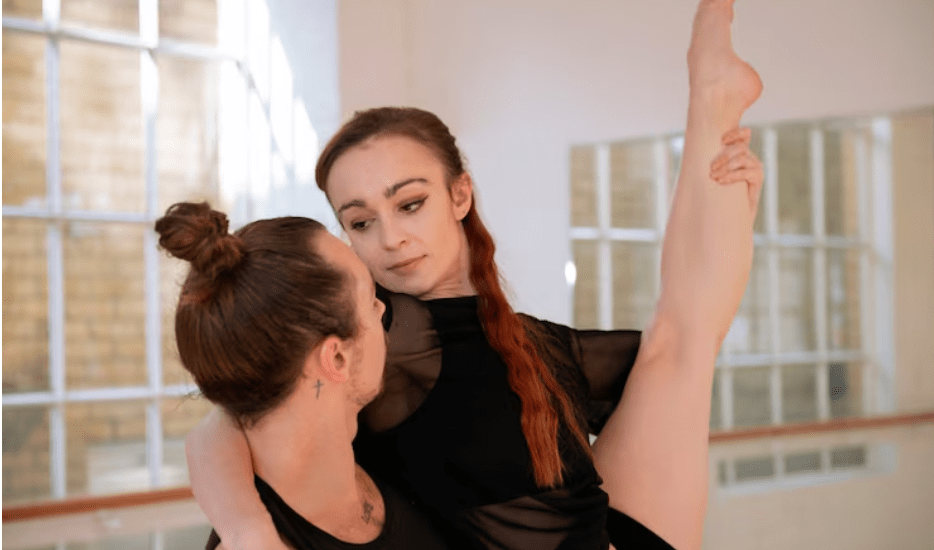
With the addition of Saturdays, classes are held Monday through Friday from 6:30 p.m. to 10:30 p.m. There is overlap in office hours. It’s a school for working people, those who come in via Penn Station or Port Authority and hope to find something to do after work. The school appears to have made room for both those who are a total beginner and those who are attempting to improve their bachata footwork. That is typically made possible by fifteen studios of different sizes.
The culture is more difficult to measure. There are studios in every borough of New York that offer Latin dance instruction, but longevity like Piel Canela’s isn’t coincidental. Schools that endure in this city for twenty-five years, maintaining their core identity and remaining in essentially the same physical location, are doing more than just scheduling and pricing. The teachers are said to be committed to teaching not only technique but also the larger music and history of the subject. That distinction is important. It is one thing to know how to lead a cross-body lead. Comprehending its origins is a completely different matter.
The physical space on 8th Avenue doesn’t appear to be slowing down, but it’s still unclear how much the shift toward online classes has altered the school’s composition—remote students learning salsa from a laptop screen introduces its own complications. The floors continue to bounce. There are still the pianos. And on a Tuesday night between 6:30 and 10:30, someone who came with no prior knowledge is most likely discovering their first clave. Nothing has changed about that.
