Close Menu
RadiowavesRadiowaves
  • Homepage
  • Privacy Policy
  • Terms of Service
  • About Us
  • Disclaimer
  • News
  • Schools
  • Trending

The Turf Wars: The Multi-Million Dollar Battle for High School Stadium Rights

May 22, 2026

The ChatGPT Cheating Epidemic Is Worse Than Anyone Admits. Here’s the Proof.

May 22, 2026

Inside Arnold High School: Soccer Champions, Jazz Bands, and a Student Theater No One Talks About

May 22, 2026

Donovan Mitchell High School Days: The Quiet Transfer That Built an NBA Star

May 22, 2026
RadiowavesRadiowaves
Subscribe Login
  • Homepage
  • Privacy Policy
  • Terms of Service
  • About Us
  • Disclaimer
  • News
  • Schools
  • Trending
RadiowavesRadiowaves
Home » The ChatGPT Cheating Epidemic Is Worse Than Anyone Admits. Here’s the Proof.
News

The ChatGPT Cheating Epidemic Is Worse Than Anyone Admits. Here’s the Proof.

Jerry LegerBy Jerry LegerMay 22, 2026No Comments4 Mins Read
Facebook Twitter Pinterest LinkedIn Tumblr WhatsApp VKontakte Email
The ChatGPT Cheating Epidemic
Share
Facebook Twitter LinkedIn Pinterest Email

One spring afternoon, a professor in a Massachusetts classroom discovered that twelve of her students had turned in work that wasn’t theirs. It was created by a machine, not lifted from a journal or copied from a classmate. Twelve were caught in a single class during a semester. How many she missed is unknown to her. People should be more troubled by that number than they are.

After joining the academic honesty board at her university, Rebecca Hamlin, a political science and legal studies professor at the University of Massachusetts—Amherst, became aware of the pattern almost immediately. She claims to be able to tell. Something put together by a language model stands out when you spend your days reading incisive, contentious, and genuinely difficult prose. It’s not always because of what it says, but rather because of the unique ease with which it says nothing. “It’s really risky,” she said, “because it’s way more obvious to someone who reads really good writing all day long.”

The precise extent to which this has spread is more difficult to determine. According to Ohio State professor Eric Anderman, who has spent years researching academic integrity, the majority of educators are undervaluing the issue. Pupils don’t acknowledge it. It’s highly likely that the numbers that do appear are lower than actual numbers. There is an odd social compact in place whereby universities make policy declarations, professors act as though they can catch it, and students act as though they are not engaging in it, all the while the real behavior continues unabated.

According to the American Bar Association, ChatGPT passed the Uniform Bar Exam by a sizable margin. It has done well on business case studies, medical evaluations, and physics tests. ChatGPT “is the future of cheating.” This is not a warning, according to David Pritchard, an emeritus professor of physics at MIT who has spent years researching how students behave in online courses. It reads more like a comment from someone who has already witnessed it.
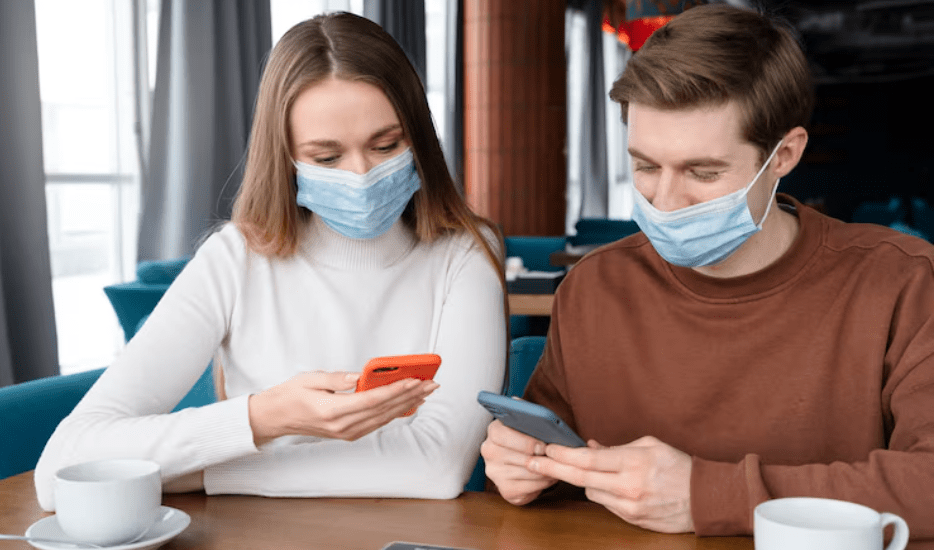
The ChatGPT Cheating Epidemic

What is lost in this discussion is what students are truly losing, which is more subdued and difficult to measure. Russell Monroe, Liberty University’s director of academic integrity, discusses dignity. the feeling that you’ve earned something. that something genuine that occurred inside of you is represented by the grade on the page. “You can look at your degree with pride,” he states, “knowing this is something I achieved on my own merit.” That might seem like a dated notion. It could also be exactly correct.

This is also a financial reality. If you fail a course due to academic dishonesty, you will have to retake it, which will cost you more money in tuition and possibly more loans. Financial aid was put at risk. a transcript with a note outlining the reasons for a student’s dismissal. Doors that shut without a knock. Students who were most inclined to take short cuts in the first place typically bear the brunt of the consequences.

Years later, a few of them begin working. They covertly outsourced jobs requiring critical thinking, writing, and reasoning. At that point, nobody checks. Turnitin is not being used by anyone. However, something is lacking, and it turns out that matters—sometimes in embarrassing ways, sometimes in truly dangerous ways.

For more than fifteen years, Denise Pope and Victor Lee, researchers at Stanford, have been monitoring the prevalence of cheating. According to their anonymous surveys, between 60 and 70 percent of students admitted to cheating at least once in a given month. This figure predates ChatGPT by a significant margin. AI hasn’t significantly increased those rates, according to their more recent data. There was already cheating. The tools are now different.

ChatGPT Epidemic
Share. Facebook Twitter Pinterest LinkedIn Tumblr WhatsApp Email
Previous ArticleInside Arnold High School: Soccer Champions, Jazz Bands, and a Student Theater No One Talks About
Next Article The Turf Wars: The Multi-Million Dollar Battle for High School Stadium Rights
Jerry Leger

    Jerry Leger is a full-time online writer and Senior Editor at radiowaves.co.uk, where he covers the latest research and developments across education, schools, colleges, and the world of sports. With a sharp eye for innovation and a genuine curiosity about how learning evolves, Jerry brings depth and clarity to topics that matter most to students, educators, and parents alike. Jerry writes with the kind of passion that only comes from genuinely caring about the subject, covering everything from curriculum changes and classroom policies to innovative school initiatives and the tales of athletic success. His work is easily readable and well-researched, whether he is dissecting the most recent findings in education or examining how innovation is changing the way we teach and learn.

    Related Posts

    A New Hampshire Town Just Voted to Strip Its School Budget to the Bone – Teachers Are Leaving.

    May 19, 2026

    The For-Profit College Trap – Why Veterans Are Still Being Targeted by Predatory Degrees

    May 19, 2026

    How Long Is The AP Stats Exam 2026 And Why That Number Feels Deceiving

    May 19, 2026

    The Pole Vault Accident That Shocked the League—And Sparked a Nationwide Safety Review

    May 18, 2026
    Leave A Reply Cancel Reply

    You must be logged in to post a comment.

    Don't Miss
    Schools

    The Turf Wars: The Multi-Million Dollar Battle for High School Stadium Rights

    By Jerry LegerMay 22, 20260

    There’s a good chance that the ground beneath the players’ feet isn’t ground at all…

    The ChatGPT Cheating Epidemic Is Worse Than Anyone Admits. Here’s the Proof.

    May 22, 2026

    Inside Arnold High School: Soccer Champions, Jazz Bands, and a Student Theater No One Talks About

    May 22, 2026

    Donovan Mitchell High School Days: The Quiet Transfer That Built an NBA Star

    May 22, 2026

    The College Dropout Tech Career Success Myth Nobody Wants to Talk About

    May 22, 2026

    Behind the Abingdon School Merger: Why Independent Schools Are Suddenly Joining Forces

    May 22, 2026

    Inside the Peel District School Board: A Quiet Empire of 153,000 Students

    May 22, 2026
    About Us
    About Us

    Radiowaves is the UK's trusted safe digital publishing platform for schools, built specifically to help children and young people report on their world through podcasts, video, and blogs. We believe every young person has a story worth telling — and we exist to make sure they can tell it safely.
    Whether it's covering a local sports day, exploring science at school, reporting on wildlife and the environment, or sharing creative work with the world, Radiowaves gives students the tools, the platform, and the confidence to become real reporters.

    Safe student publishing — podcasts, videos, blogs, and news stories, all moderated before going live
    A global network of young reporters — students connect with peers across the UK and around the world
    Curriculum-linked projects and competitions — exclusive opportunities that bring learning to life
    Teacher and parent confidence — every piece of content passes through safeguarding protocols before it is published

    Our platform is used by primary and secondary schools, and our content spans news, education, science, sport, the environment, music, and local community stories.

    Our Picks

    The Turf Wars: The Multi-Million Dollar Battle for High School Stadium Rights

    May 22, 2026

    The ChatGPT Cheating Epidemic Is Worse Than Anyone Admits. Here’s the Proof.

    May 22, 2026

    Inside Arnold High School: Soccer Champions, Jazz Bands, and a Student Theater No One Talks About

    May 22, 2026
    Disclaimer

    Radiowaves is a publishing platform for education. Nothing on this website should be interpreted as professional advice of any kind, including information about science, health, finance, economics, current affairs, or local news. Specifically, nothing on radiowaves.co.uk qualifies as tax advice, investment advice, financial advice, or any other type of regulated financial service. The Financial Conduct Authority (FCA) has neither authorized nor regulated Radiowaves Schools Ltd. Student reporters’ coverage of financial issues is solely intended for informational and educational purposes. Before making any financial decisions, readers should always speak with a qualified financial expert.
    The content of any external websites that are linked from this platform is not the responsibility of Radiowaves. An external link does not imply support for that website, its content, or its proprietors.
    Parents and guardians are encouraged to monitor their children’s online activity and report any concerns to their school or directly to Radiowaves via our Contact page, even though every effort is made to ensure the platform is safe for young users.

    The Financial Conduct Authority (FCA) or any other financial regulatory body in the UK or abroad has neither authorized nor regulated Radiowaves Schools Ltd. as a financial institution. When making financial decisions for oneself, a business, or an investment, nothing on this website should be trusted.
    Please speak with an independent financial advisor who is fully authorized and subject to FCA regulation if you need financial advice.

    • Homepage
    • Privacy Policy
    • Terms of Service
    • About Us
    • Disclaimer
    • News
    • Schools
    • Trending
    © 2026 ThemeSphere. Designed by ThemeSphere.

    Type above and press Enter to search. Press Esc to cancel.

    Sign In or Register

    Welcome Back!

    Login to your account below.

    Lost password?