

Even though McMasters Elementary’s hallways still smell like crayons and floor polish, something seems strange if you stroll through them in the late afternoon. Echo is more prevalent than it was previously. There were fewer backpacks in line. fewer voices. For years, Pasadena teachers have been observing it in that subdued, somewhat superstitious manner: first, a class section has been reduced, then a kindergarten room has been converted into a storage area, and finally, a well-known name has retired and never been replaced. The district has now expressed what no one wanted to say aloud: some of these schools might not make it through the upcoming fiscal year.
Just southeast of Houston, the Pasadena Independent School District has started early discussions about closing or merging campuses. First were Tegeler Community School and McMasters Elementary. The language used by district officials, such as “responsible stewardship” and “staffing ratios,” has been cautious, but the underlying reality is more straightforward. Texas pays schools by the head, and there are no longer enough children entering the building.
On paper, the funding model—money following the student—seems sensible. In actuality, districts are penalized the instant families begin to gravitate toward private schools, charter schools, or homeschooling arrangements around the kitchen table. Families have also been straying. Habits from the pandemic solidified into long-term decisions. Even if a parent enjoyed virtual learning in 2020, they might not return. Speaking with people in Houston-area districts, it seems as though the long-held belief that public schools would always be the default stopped being true sometime around 2022, and no one really made an announcement about it.
It’s important to note that Pasadena isn’t alone; HISD, Spring Branch, and Fort Bend are all experiencing the same dire statistics this year. An underutilized building still costs money, as the Baker Institute pointed out. The lights remain on. The roof continues to leak. The boiler is still getting old. A half-empty school cannot be partially heated. It’s possible that Pasadena’s current actions are only the start of a much larger national reckoning that suburban areas in Ohio, Pennsylvania, and California will have to deal with in the coming years, if they haven’t already.
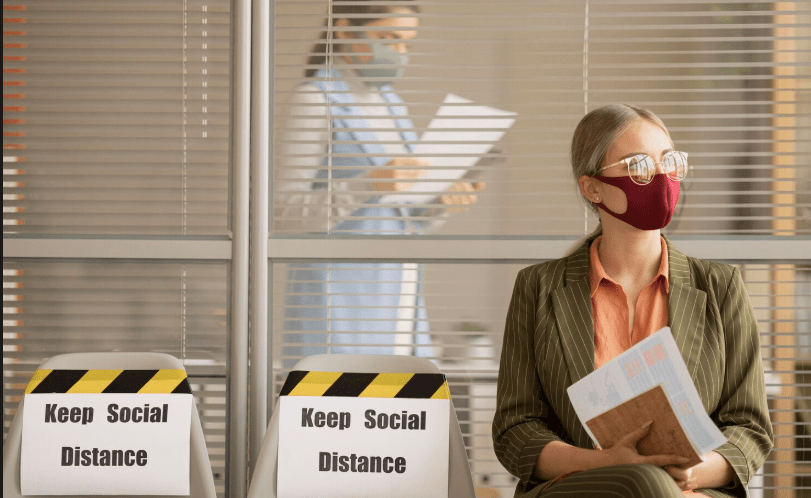
The district claims that any staff reductions will occur through attrition, which is a kinder term than layoffs but has a comparable impact on a community. There is no replacement for a retired counselor. The budget for a music teacher’s position silently vanishes. The texture of a school changes when you multiply that by a few dozen positions throughout a district, even if there isn’t a single moment when the change occurs.
It’s difficult to ignore how increasingly American this tale is. For more than ten years, birth rates have been declining. Patterns of migration changed. Young families were forced to leave older neighborhoods due to housing costs. The children who would have occupied those classrooms in Pasadena were either not born or their parents relocated. Seeing a district use such meticulous, formal language to plan its own shrinkage is almost depressing.
As the discussion progresses, Pasadena ISD promises to keep the community informed. It’s appropriate to say that. The more difficult discussion, however, is just getting started. It concerns what happens to a town when its schools begin to close and when the neighborhood’s anchor institutions discreetly close. Not only in Pasadena, either.
