

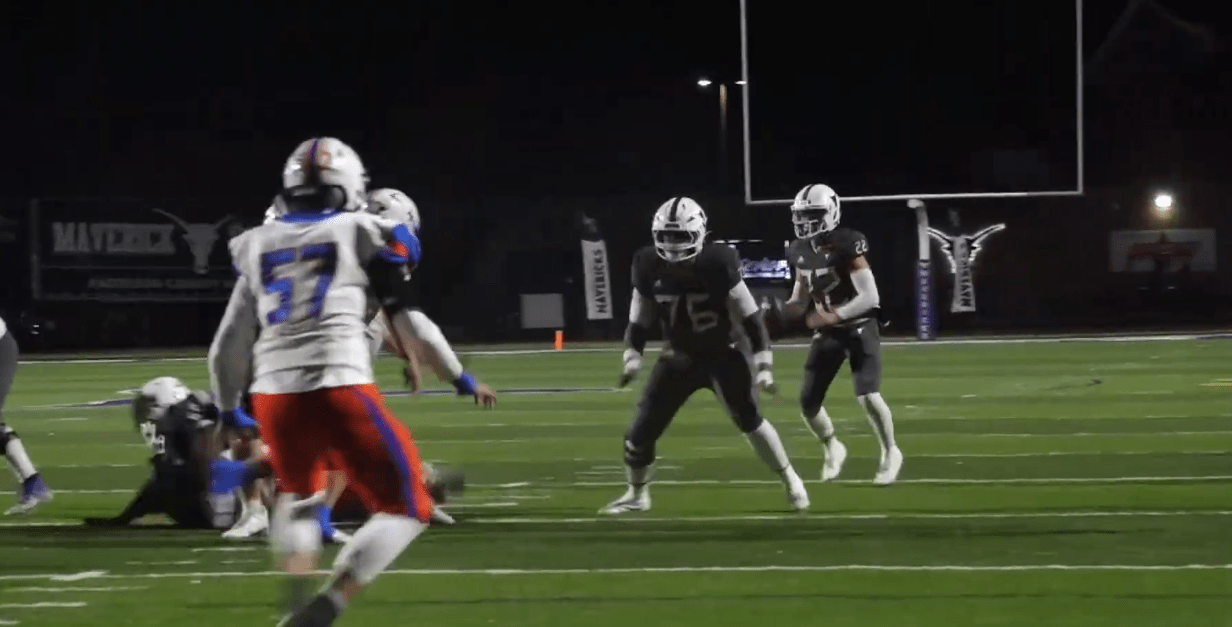
On a Sunday during the 2025–2026 school year, a Cherokee High School student and his father arrived at the Volunteer High football field house in Church Hill, Tennessee, to meet with head coach Jeremy Wagner. He stayed for about 30 to 40 minutes and took part in planned activities that are considered practice under TSSAA regulations. During the visit, a college program was contacted on his behalf. Wagner claims he was unaware of the student’s arrival. It’s highly likely that he now realizes how much the visit has cost his program.
At the end of April, the Tennessee Secondary School Athletic Association put Volunteer’s football program on probation due to infractions of three different bylaws: the recruiting rule, the practice rule, and the sports calendar rule. There was more than one instance of the infractions. According to TSSAA’s investigation, Volunteer also engaged in organized activities with more than six players at least three times outside of the ten-day offseason practice window. The TSSAA’s investigation, along with the school’s own, verified that the rules regarding coaches’ interactions with students from other schools were not adhered to. In a straightforward letter to Principal Dr. Greg Sturgill, TSSAA Executive Director Mark Reeves stated that there is a purpose for the protocol, and in this instance, it wasn’t followed.
For a program that had just recently begun to experience what winning looked like again, the timing is especially challenging. In his first season as head coach, Wagner led the team to a 7-4 record, the first seven-win campaign in school history, and just its second postseason trip since 2007. Volunteer had suffered consecutive losing seasons prior to Wagner’s arrival. The community took notice of the genuine turnaround. Reaching the playoffs for the first time in almost 20 years meant something that can’t be measured in a probation letter for players on that roster who had never had a winning season at Volunteer. Under more stringent constraints, the program is currently navigating what comes next.
Volunteer High School Football — TSSAA Probation 2026 — Key Facts
| School | Volunteer High School (Falcon Football) — Church Hill, Hawkins County, Tennessee |
| School District | Hawkins County Schools |
| District Superintendent | Matt Hixson |
| Principal | Dr. Greg Sturgill |
| Head Coach | Jeremy Wagner (first season as head coach: 2025) |
| 2025 Season Record | 7-4 — first team in school history to reach seven wins; only second playoff appearance since 2007 |
| Governing Body | Tennessee Secondary School Athletic Association (TSSAA) |
| TSSAA Executive Director | Mark Reeves |
| Probation Period | Through end of 2027–2028 school year |
| Total Fine | $1,000 ($500 per year of probation) |
| Violations Found | 1) Unauthorized offseason practice (3+ sessions with more than 6 players, outside permitted 10-day window); 2) Recruiting rule violation (coach contact with Cherokee High student and family); 3) Non-enrolled student participated in organized activities defined as practice |
| Immediate Penalty | No additional offseason practice for remainder of 2025–26 school year; individual instruction limited to 6 players per day |
| 2026–27 Restriction | Only 5 days of offseason practice within a 15-day period |
| Cherokee Student | Invited to a “Sunday training” by a Volunteer student who lives with Coach Wagner; participated 30–40 minutes in activities defined as practice; ineligible to play for Volunteer for 12 months if he enrolls |
| Coach Wagner’s Position | Denies knowledge of invitation to Cherokee student |
| Postseason Eligibility | Programs on probation remain eligible for postseason play if they qualify |
| Warning | TSSAA stated additional violations could result in more severe disciplinary action |
There are layers to the penalties themselves. No more off-season practice is allowed for the rest of the academic year; coaches are allowed to work with individuals in groups of six or fewer, but organized team sessions are conducted. The team will only have five days of offseason practice during any 15-day window in the 2026–2027 school year, as opposed to the usual ten. The probation has a $1,000 fine and lasts until the end of the 2027–2028 school year. It’s important to remember that probation does not eliminate the Falcons’ ability to qualify for the postseason. However, there is a genuine and cumulative disadvantage to preparation.
The Cherokee student at the center of it will suffer his own consequences if he enrolls at Volunteer: he will not be allowed to play football there for a full year. According to the TSSAA’s findings, the invitation was sent by a volunteer student who lives with the coach, and Wagner claims he was unaware of it. When it came to determining what transpired during the actual visit, the TSSAA didn’t seem to give that distinction much weight.
In a statement, Hawkins County Schools Superintendent Matt Hixson expressed support for the TSSAA’s ruling and detailed the district’s efforts to establish more transparent procedures. It’s the kind of methodical institutional language that covers the essential points without going into detail about how the situation came to be. Reading between those lines gives the impression that the district is sincerely attempting to advance rather than challenge an already completed process.
It’s still unclear if the practice limitations will have a significant impact on the Falcons’ on-field performance in 2026. Some programs can withstand these kinds of penalties without losing ground, especially if the coaching staff has already developed a distinctive style. The warning included in the probation decision itself is more difficult to understand: if there are any more infractions, the consequences get worse. That is a burden that will accompany every offseason choice for the next two years for a program that has only recently found its footing.
